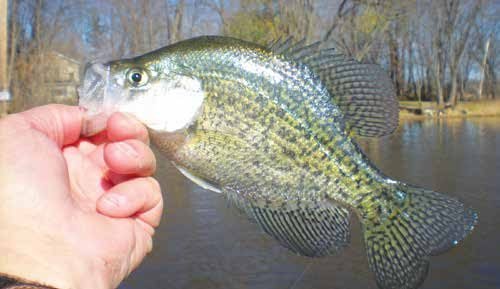
For fall river crappie, I like it simple. Drifting a light jig and minnow right to their holding area.
As a perfect example, we caught a couple of crappie close together by a bottom snag and then anchored. The winning formula was tossing a 1/32nd ounce jig 10 yards upstream and letting it sink and drift to the fish. They were packed tight. Several boats stopped near us but couldn’t hit the sweet spot. We had steady action.
River backwaters are different. We found one school hugging bottom 15-feet down. Rigging a slip bobber 14-feet deep was the ticket. The right boat position also let us reach the branches of laydowns, allowing us shallow and deep fish.
Jigs are excellent for crappie. And they work for other species, too.
My favorite, also for rivers, is a basic smallmouth bass bucktail with black or natural brown hair. Making your own is a good winter hobby. Use store-bought pre-painted black jig heads to eliminate painting; 1/8th ounce is a good bass size.
Here’s how: You’ll need a low-cost vise, thread, a bobbin to hold thread, a bobbin line threader and deer hair which are available through companies like Barlow’s and Lure Parts Online.
To start, place jig in vise, hook down. Wrap a few winds of thread around the jig collar. Hold with a drop of super glue. Cut bucktail long enough to extend past the hook bend. Feather it around on the collar. Hold it with another drop of glue and wind it tighter. Let thread bobbin hang down to hold the hair in place.