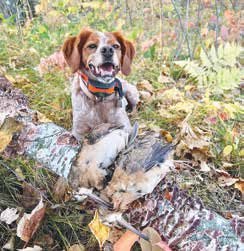
Timberdoodles provide great shooting when their migration is on and the flight is “in.” The trick is predicting when the birds will arrive, then knowing where to find them.
Timing and Temperatures You can find local birds in September, but woodcock traditionally migrate through Wisconsin in the first two weeks of October. That said, the flight seems to be getting later every year, and the last couple weeks of October can be prime.
The flight is generally just ahead of deep freezes that lock up the woodcock’s food supply of earthworms that the long-billed birds probe for in soft soil.
Watch the Thermometer Look to the north. Study the temperatures in northern Minnesota and Michigan, and southern Ontario. When deep freezes (a couple nights of 27 to 28 F or below) happen there, watch for woodcock to arrive in Wisconsin, north to south, as they travel ahead of the cold.
Moon Woodcock fly mostly at night, so the moon likely serves as a navigational tool. Data shows that autumn woodcock movement increases with a gibbous (more than 50% lit) moon. A waxing moon – one moving toward full – seems to induce more woodcock movement than a waning moon.
Wind and Barometer A north, northwest or northeast wind brings woodcock into Wisconsin, as the birds ride the flow southward. Rising barometric pressure, associated with the clear blue skies and strong tailwinds of a departing low pressure system, also brings woodcock.
Map Work Woodcock concentrate in low, moist spots, the better for hunting earthworms. Look for creeks, brooks, beaver ponds, bogs and marshes, and focus your efforts there. River and stream corridors often serve as migration routes.
Know Woodcock Cover Aspen – particularly young stands with trunks of buggy whip to pole size – attract woodcock. The clean forest floor lets timberdoodles hunt for worms, the stem density protects them from land-based predators, and the overhead canopy foils would-be avian enemies.
Other preferred habitats include alder runs (for their cover density and moist soil), and willows. Dogwood and sumac also produce.
Hunt Edges Woodcock prefer transition zones or edges, and a seam between cover types usually holds the most birds. Aspen to tag alders, tag alders to marsh or bog, forest to dogwood, willow to marsh, second growth timber to brush, and any forest to wetland zone, are all worth investigating.
Edges of meadows and abandoned fields also attract woodcock. Meadows with goldenrod really attract woodcock.
Dog Work When danger nears, timberdoodles sit tight, relying on cryptic coloration rather than wings for safety. Combined with the thickness of good woodcock cover, these factors mean that you need to keep your dog – flusher or pointer – close.
Be ready for an unexpected flush, or a stop-in-his-tracks point from your pointer. To make up for the reduced amount of real estate you’ll work, take several swings through good-looking cover.
Hunt Slow The best hunting approach is slow, methodical and thorough. Pause often, always with your gun at the ready. Even with a good dog coursing the cover, lots of stops are essential for letting the dog work and come across the narrow scent cone that an idle woodcock creates.
Shoot Quick Woodcock zig, zag, juke, dodge, pause, accelerate, dip and rise in flight. They are hard to hit! Shoot quickly as the woodcock rises, with safety for canine and human companions in mind. You’ll miss a lot, but that’s three-quarters of the fun.