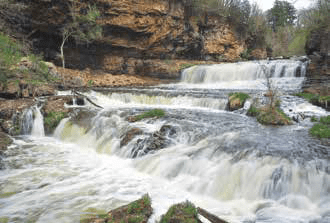
Regardless of the season, water is a focal point within the Willow River State Park. The 2,891-acre greenspace is located on the northwest part of Wisconsin, on the outskirts of the border community of Hudson in the Minneapolis-St. Paul metropolitan area.
The backdrop to all of this is acres and acres of rolling countryside, which provides unique vistas and breathtaking beauty from one season to the next.
Willow River State Park is, perhaps, best known for the namesake Willow Falls, which provide spectacular year-round beauty. Depending on the temperatures, the falls become a winter wonderland with unique crystallized formations. In the warmer months, the falls showcase a powerful cascade of water that leads into a 200-foot-deep gorge.
Little Falls Lake is another noteworthy attraction. The shallow reservoir leads into the Willow River. When conditions warrant, the lake is an ideal spot for fishing, paddling and swimming. Little Falls Lake features a boat ramp for non-motorized watercraft. Fishing typically is abundant within the park’s waters, thanks to the frequent stocking of trout.
Hiking is an especially popular activity within the park, with 11 designated trails carved out. The trails range in length from 0.3 miles to three miles, and accommodate all skill abilities.
Other recreational opportunities include camping with 72 specific sites, rock climbing, and a designated mountain biking route.
Willow River State Park also is steeped in history displayed at the Willow River Nature Center. Historical documents and artifacts trace the park’s earliest settled years to the late 18th Century. Two tribes – the Santee Sioux and the Ojibwe – inhabited areas in and near the parksite, attracted to the wild rice lakes plentiful in the region.
The Wisconsin Conservation Commission acquired the land in 1967, and the park opened in 1971.
Location: 1034 Highway A, five miles north of Hudson. Open daily from 6 am to 11 pm, year-round.