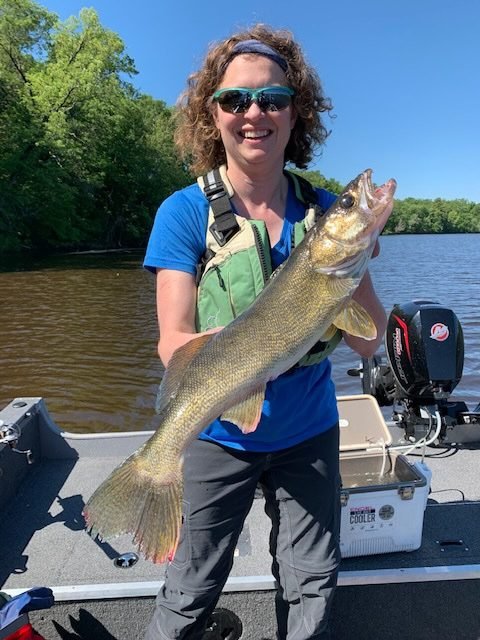
One of the most asked questions in my boat over the years is where do the walleyes go after they spawn? It is almost like they disappear. Catching walleyes during the spring spawning run in April can be really good and almost anyone can catch them. Post-spawn can be more of a challenge.
I fish the Wisconsin River and, if you know where to look at the right times of the year, walleye fishing can be as simple as one, two, three. Catching a pile of small fish in the deeper water of the Wisconsin river channel anytime of the year especially during the spring spawn is relatively easy. Finding larger eating-sized walleyes and the even larger slot- sized fish and up takes more knowledge.
Understand the species you’re targeting in the river system including the time of the year you are targeting them is of course critical to success. River walleyes exert a lot of energy early in the year traveling to and from
traditional spawning grounds. Post-spawn fish are naturally fatigued and seek rest. They are looking for areas outside of the current with warmer water offering plenty of food and cover.
Because post spawn walleyes seek out these shallow water refuges in locations well out of the current, so will the successful angler. On the river system, look for locations in one to three feet of water that are well off the main river channel with an ample food supply and good cover. I look for wooded shorelines with sand and mud as opposed to rock. Walleyes gravitate to these areas, and will hold there for up to two months depending on water temperature and conditions.
To target these fish, cast either shallow running crankbaits or jigs tipped with plastics or minnows. I cast my presentation close to shore and retrieve it very slowly while thoroughly searching the area for the walleyes resting there. Once you catch a fish, continue to cast that area thoroughly. If you find one walleye at this time of the year, there likely will be more. To speed things up a little with finding the fish, you can slowly run your boat just outside the shoreline while watching your side imaging. Once you locate some fish or a pod of fish, mark that position on your locator or make a physical note on that location and come back and fish for them later.
These post spawn techniques will work on any river system, but the important part is putting in the homework to find out which areas are holding the fish. So, here is your assignment: Instead of heading out and going to your traditional starting points this year, go off the beaten path, hit some new water, and try some of these techniques. You may be pleasantly surprised with what you find, and you may catch some really nice walleyes. And more than likely, you will have the areas all to yourself.