As autumn becomes winter, many of
Wisconsin’s songbirds migrate south.
But plenty of resident birds stick
around to bring us joy on winter days.
Black-capped chickadees, whiteand
red-breasted nuthatches, northern
cardinals, brown creepers, downy and hairy
woodpeckers, red-bellied woodpeckers,
American goldfinches and tufted titmice
lead the backyard bird parade.
We even have a few species that come
south into Wisconsin for the winter, most
notably the pine siskin and common
redpoll.
Right now, before winter really gets going
and clasps its grip on the land, is the time to
set up a feeding station or two in your yard
to attract avian visitors.
Fortunately, you don’t need a different
strategy to attract each species.
Black oil sunflower is perhaps the best
feed of all to offer winter birds. Almost all of
the species listed above will heartily dig into
a feeder filled with oily and nutritious black
oil sunflower seed.
If you wish to keep things simple and offer
but one kind of seed, black oil sunflower is
it. A fun kind of feeder is the tubular model,
with six or eight perches for the birds to
land on and reach into the supply to grab a
seed. Chickadees will fly away to a tree to
crack a seed open. Nuthatches will do the
same, or just stash it somewhere in the bark
for later.
Everybody loves cardinals, and cardinals
love sunflower, but redbirds like a sturdy
platform to land on, which makes tray
feeders the ticket. The other sunflower eaters
will use trays, too.
Some winter birds like their seeds small.
Goldfinches, pine siskins and redpolls have
short, pointy beaks designed for tiny seeds.
Black thistle is the answer here. There are
special tube feeders with tiny holes for the
birds to grab seeds out of. You can also use
mesh “thistle bags,” and it is really fun to
watch acrobatic birds get their meal from
these swinging offerings.
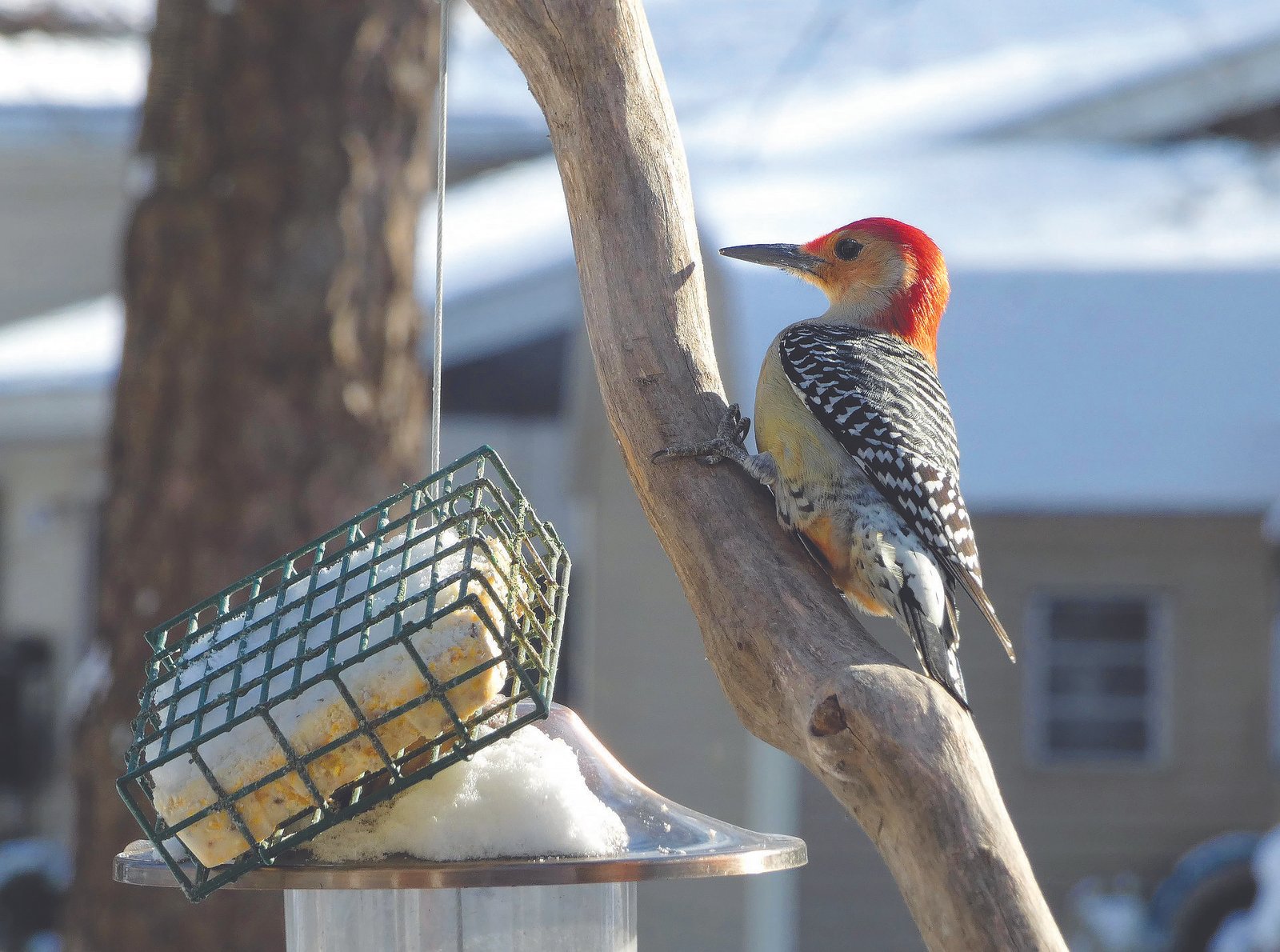
For the woodpeckers and nuthatches, put
out a suet feeder. These basket “cages” can
hang from a tree limb or porch. Put a block
of suet (rendered animal fat, best laced with
sunflower seeds) and watch the birds come.
Suet is high-protein, high-fat and highcalorie,
just what winter birds need.
One of my favorite pastimes is to save
and freeze the fat from any deer my sons
are lucky enough to get, and stuff that into a
suet cage. It does not last long!
Once you start feeding birds and they
begin coming regularly (often on sunny
mornings and afternoons), the kind thing
to do is to keep feeding them. Your feeders
will become part of their circuit. They will
benefit from a steady supply of food and
once you’re off the circuit, it may take them
awhile to find their way back.
Squirrels can be a problem, it is true. They
like seeds, too. One of the best solutions is to
set them up with a corn feeder somewhere
away from the bird feeders, and let the
bushytails have their own place and food.
Feeding winter birds is fun, simple and
rewarding. Get in the groove now and
start your own feeding station, then watch
winter’s